 Fellow Canadians: All inFlow plans are available in Canadian dollars




Key takeaways
- GS1 is a global non-profit organization that develops and maintains standardization for business communication. They are the only official provider of GS1 barcodes, which ensure businesses can sell products through major retailers and online marketplaces.
- Each GS1 barcode is encoded with a GTIN (Global Trade Item Number). This unique identifier links product details to a central database.
- The purpose of GS1-registered barcodes is to prevent barcode duplication issues and help maintain product credibility and authenticity.
- Small businesses that use barcodes only internally or sell their goods independently may not initially require GS1 barcodes. However, GS1 barcodes for small businesses become essential if they expand to major retail channels or online marketplaces.
- There are flexible purchasing options for GS1 barcodes. Businesses can buy individual barcodes with a one-time fee or purchase a company prefix that requires a renewal fee.
- Many large retailers and ecommerce platforms mandate GS1 barcodes for product listings.
You’re likely to see at least one GS1 barcode on any given day. In fact, GS1 barcodes are scanned billions of times every day. We might not always notice them, but barcode systems are just about everywhere, from retail to healthcare and beyond.
Although they look a little complex, barcodes are very simple to use. They’re not just for big box stores, either. Barcodes can come in handy, no matter the size of your business.
We sat down with Michelle Covey, VP of Commercialization at GS1 US, to get her insights on everything barcode related. Watch our barcoding deep dive with Michelle below:

In the following article, we’ll take a closer look at how to make barcodes, what they are, and what their future holds, while also outlining GS1 barcode pros and cons to help you decide if official barcodes are worth it for your business.
What is a GS1 barcode?
Since their introduction back in the 1970s, barcodes have spread worldwide and even have their own global standards set by GS1. Barcodes acquired from GS1 are internationally recognized and easy to use.
Two main elements make up a GS1 barcode:
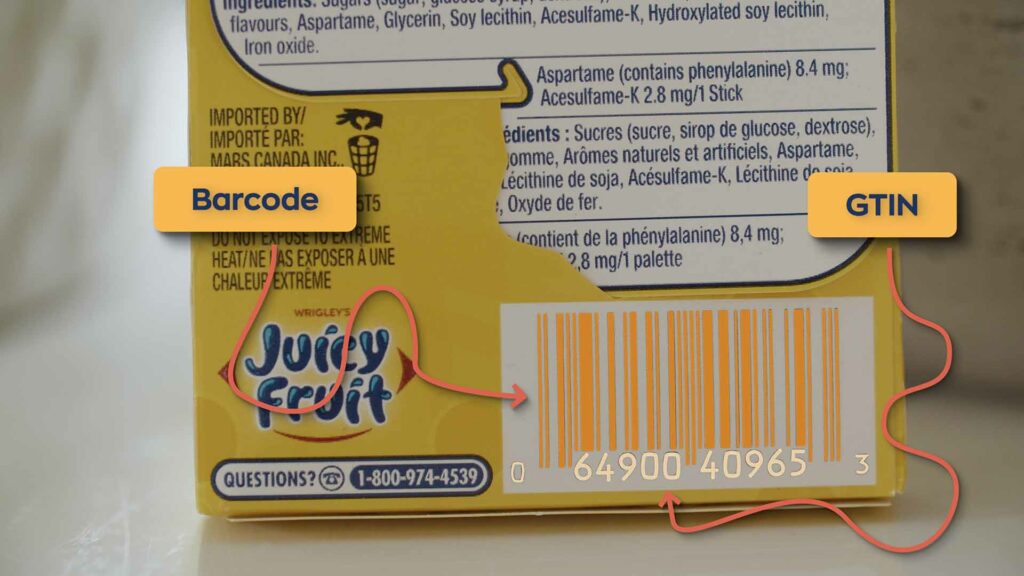
- Barcode – The recognizable black and white lines (or another pattern for 2D barcodes) we see on products are known as barcodes. The barcode is a machine-readable representation of the numbers underneath. In traditional barcodes, the presence or absence of lines of varying widths represents the numbers.
- GTIN – The numbers underneath the barcode identify the product. When barcodes are made, the product identifier number is made first; then, it’s encoded into the barcode so that machines can read it. This globally recognized unique number is known as a Global Trade Item Number (GTIN).
What is a UPC barcode?
When you start looking at how to use barcodes, you’ll probably come across the term UPC. The number under the barcode (the GTIN) can appear in several formats. The Universal Product Code (UPC) is one such format, commonly used across North America, and is actually an example of a GS1 barcode. When comparing GS1 vs UPC codes, remember that a UPC is simply a specific type of GS1 code.
A UPC barcode is encoded with 12 numbers. The digits on the left represent the company, and the five on the right identify the specific product type. The final number on the right is a ‘check digit.’
Common uses of barcodes in retail and business operations
In some industries, such as retail, barcodes are now so useful that businesses can’t function properly without them. One of the most common uses for barcodes is when we pay for a product at the register. But barcode systems can help with a vast range of retail tasks, including:
- Receiving products
- Adjusting stock
- Product picking
- Stock transfer
- Checking stock
- Cycle counts
- Looking up orders
Without a barcode system, it’s tough to keep track of the status of a product. Today, people use barcodes in many areas, including ticketing, mail handling, and healthcare.
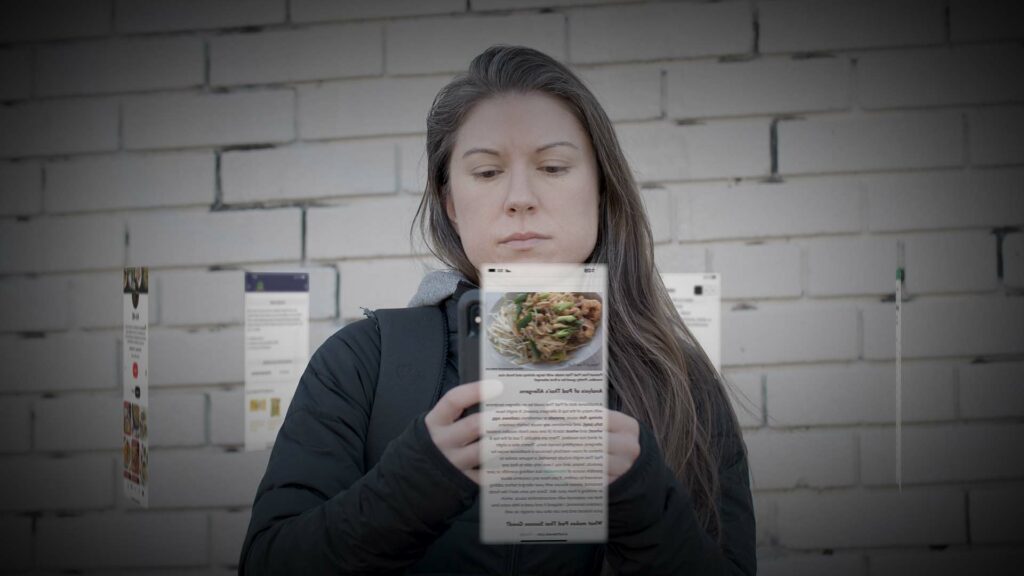
For example, the UK National Health Service recently launched a food app that lets families scan food barcodes and suggests healthier alternatives. As technology develops, more and more use cases are appearing.
This is because, while traditional barcodes (the ones with vertical lines) can store enough information to identify products, multi-dimensional barcodes can store a lot more. QR codes, for example, can point us to a website or app filled with information about a product or event.
This opens up a world of opportunities, from tracing the source of a recalled product to connecting patient information in hospitals.
Why official GS1 barcodes matter (key benefits)
For any business weighing GS1 barcode benefits vs costs, official GS1 barcodes protect your brand and allow you to operate smoothly across the global supply chain. Here are some of the key benefits they offer:
- Universal Acceptance — Major marketplaces enforce official barcode rules. For example, there’s an Amazon GS1 barcode requirement for sellers, so any product code must be an official GS1 barcode that can be validated against the GS1 Global Registry.
- Globally Recognized Product Identity — GS1 barcodes follow a single global standard, so your products can be scanned, tracked, and sold consistently across locations.
- Brand Ownership and Protection — Each GS1 barcode is registered to your business, preventing other sellers from reusing your identifiers or listing counterfeit products under your brand.
- Supply Chain Visibility and Traceability — Official barcodes connect products to standardized data, improving inventory accuracy, recall readiness, and traceability across warehouses, partners, and retailers.
- Built-in Scalability — Starting with GS1 barcodes makes it easier to add products, expand sales channels, and avoid duplicate or conflicting identifiers as your business grows.
- Credibility with Buyers and Partners — GS1 compliance signals professionalism and trustworthiness, helping smaller businesses compete with larger brands.
Do I need a GS1 Barcode?
For many small business owners asking “are GS1 barcodes worth it?”, the short answer is: it depends. In order to figure out whether or not you need a GS1 barcode, start by asking yourself this question. Do I want to use these barcodes externally?
By this, we mean do you want other companies and organizations to be able to scan those barcodes and recognize them? If you answered yes to this question, then you will absolutely need to use registered GS1 barcodes for your products.
GS1 barcodes for small businesses – benefits & considerations
Small online retailers sometimes feel they don’t need a GS1 barcode. But barcodes for small businesses are essential. If a company decides to expand to other channels, it’ll need a way to identify its products.
The rise of omnichannel shopping is paving the way for a mix of physical and digital (…yes, sometimes called phygital…), and businesses must meet customers where they are.
So, when you use a GS1 barcode on your products, whenever someone scans it, it’s clear that you’re associated with it. This can help protect your brand and reassure the seller about the product’s authenticity.
Of course, growing businesses might not need hundreds or thousands of barcodes at first. GS1 now allows businesses to buy a single GS1 barcode, so they can hit the ground running.
How to get an official GS1 Barcode (options and costs)
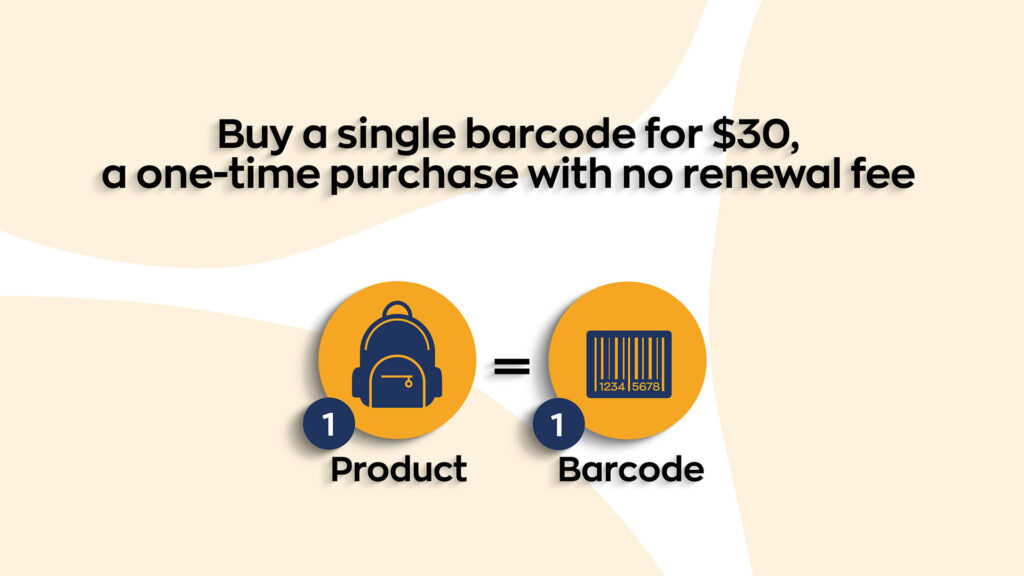
For globally recognized barcodes, GS1 offers Global Trade Item Numbers (GTINs) that you can encode into barcodes and use around the world. We’ve partnered with GS1 US to simplify how to get a GS1 barcode, making it swift and easy to buy official GTIN barcodes for your products. You can visit our inFlow GTIN Barcode Shop to purchase individual barcodes for a one-time fee of $30.
However, if you need more than ten barcodes, we recommend going directly to GS1 and purchasing a company prefix. The cost breakdown for GS1 barcodes is as follows:
| Number of items needing a barcode/GTIN | Initial fee | Annual renewal fee |
|---|---|---|
| 1 | $30 | $0 |
| 10 | $250 | $50 |
| 100 | $750 | $150 |
| 1,000 | $2,500 | $500 |
| 10,000 | $6,500 | $1,300 |
| 100,000 | $10,500 | $2,100 |
| GS1 Company Prefix including U.S. FDA NDC Labeler Code | $2,100 | $2,100 |
How to create barcodes for your products
There are several ways to create barcodes for your products, even without GS1 (they’re not for everyone!). The right solution depends on what your business needs. It’s possible to generate barcodes with online tools, but this can become tricky after the first few products.
If you want a more in-depth look at how to start barcoding your small business, check out our Ultimate Barcoding Guide. It covers everything there is to know about barcodes, including all the various ways you can create barcodes.
Tools and hardware solutions for barcode scanning and printing
In order to create a fully functional barcode system, you’ll need a few things.
- Barcode software — Starting with the right software is key. For example, inFlow’s app generates barcodes and turns your mobile device into a barcode scanner. Or, if you already have your own barcodes, you can easily input them and start scanning.
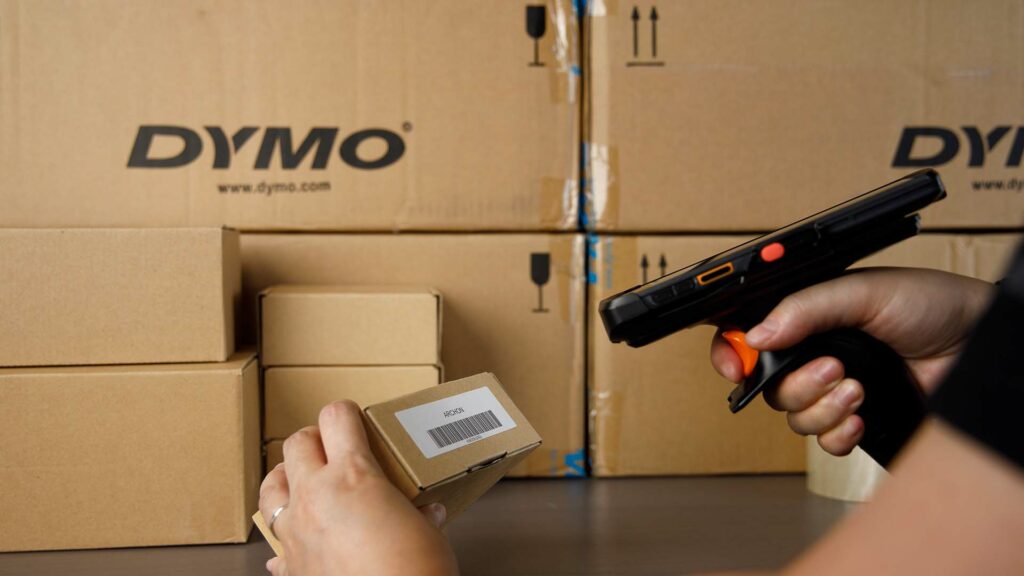
- Barcode scanners — The camera app on modern smartphones can double as a barcode scanner, but the scanning speed leaves much to be desired. If you need a fast, high-tech scanning option, we offer the inFlow Smartphone Scanner, an Android device equipped with a dedicated laser scanner built in.
- Barcode printers — Printing your barcodes is easy, too. You can even use a standard office printer to label your shelves. For mobile workflows or on-the-go labeling, the inFlow Portable Printer is another great option. It connects wirelessly, supports thermal labels, and is compact enough to carry around a warehouse or job site. Whether you’re tagging products, bins, or shelves, this printer gives you flexibility without being tethered to a desk.
The future of GS1 barcodes: 2D codes and the sunrise 2027 initiative
The traditional GS1 barcode (vertical-line barcodes) are extremely useful, but multi-dimensional barcodes can store much more information. These might be QR codes or matrix barcodes with digital links.
With these links, we can give a consumer information about how an item of clothing is made or trace a food product all the way back to the field.
We can expect to start seeing more and more of these multi-dimensional barcodes as businesses worldwide find more ingenious uses. In fact, GS1 has launched a program called Sunrise 2027 to help companies make the change from one-dimensional barcodes.
FAQ
What is a GS1 barcode and what are they used for?
A GS1 barcode is an internationally recognized product identifier consisting of black and white lines that encode a Global Trade Item Number (GTIN). They’re used for retail checkout, inventory tracking, supply chain management, and product authentication. GS1 barcodes enable global commerce by providing a standardized way to identify products across retailers, warehouses, and marketplaces worldwide.
How do GS1 Application Identifiers work in inventory management?
GS1 Application Identifiers (AIs) are standardized prefixes that define data types within barcodes. For example, AI (01) indicates a GTIN, AI (17) shows expiration dates, and AI (10) identifies batch numbers. Inventory systems automatically interpret these codes to update stock levels, track expiration dates, and manage lot traceability without manual data entry.
Do I need an official GS1 barcode for my business?
You need a GS1 barcode if you plan to sell through major retailers or online marketplaces like Amazon, which require official GS1 validation. Small businesses selling only internally or independently may use alternative barcode systems, but GS1 barcodes become essential for scaling to larger sales channels.
How do I obtain a GS1 barcode and what does it cost?
Individual GS1 barcodes cost $30 with no renewal fee through GS1 or authorized resellers like inFlow’s GTIN Barcode Shop. For multiple products, you should go through GS1 directly for company prefixes starting at $250 for 10 barcodes with a $50 annual renewal. You’ll need to provide business information and register your products in the GS1 database for global recognition.
What’s the difference between GS1-128 and other barcode types?
GS1-128 barcodes can encode multiple data elements like product IDs, batch numbers, expiration dates, and quantities using Application Identifiers. Standard UPC/EAN barcodes only contain the product identifier (GTIN). GS1-128 is ideal for supply chain tracking and logistics, while UPC codes work for basic retail point-of-sale scanning and consumer products.
Can you recommend tools for generating GS1 barcodes?
For official GTINs, use the inFlow GTIN Barcode Shop to purchase individual GS1 barcodes for $30 each with no renewal fees. Once you have GTINs, you can design and print GS1-compliant labels using inFlow’s built-in Label Designer. Include your GTIN barcode in the label template to produce retailer-ready labels. You can also use dedicated thermal printers, like inFlow’s Portable Printer, for professional labeling.
How can I verify if a barcode is an official GS1 barcode?
Check the GS1 Global Registry database using the “Verified by GS1” service. Enter the GTIN number to confirm it’s officially registered. You can also verify that the company prefix matches the brand owner. Counterfeit or unofficial barcodes won’t appear in GS1’s validation system.
I don’t think all of this helps the little person in the street market just trying to live. It seems to establish ONE PRICE on the object being sold? Is that Correct?? Please answer so I know how to buy my own food at a reasonable price. A senior living on small funds and this info is very important to us….
Hey Jean,
GS1 registered barcodes are for business owners to register their product in a global data base. It doesn’t have any defined value added to the barcode. The barcode authenticates the product. For example every model of the iPhone has a unique UPC code. This allows various retailers to ensure the product is genuine when selling it to their customers. I hope this helps.
Cheers,
Jared
I am in a bind. I have been able to partner with a small bookstore to sell all-occation greeting cards. I am assuming they would want me to create a bar code for pricing. How do I go about doing this? I thought it was a simple process but I am confused. I would love to subscribe with inFlow if to get this barcode created to show the Description of the product which is Greeting Cards, and price at $2.75. Thanks, I not so computer literate and so handicapped with this. thanks for your help.
Hey Matthew,
Thanks for stopping by! To answer your question, it sounds like you may need to register a company prefix with GS1. The reason for this is I assume you have many different designs, so each of them will need their own unique barcode. However, you say that the bookstore you’re selling to is very small, so they might not need you to provide a UPC. Using officially registered GS1 barcodes are required at larger retailers, but small mom and pop shops may not ask for them.
When you purchase barcodes from GS1 you purchase a Global Trade Item Number (GTIN) and that GTIN is then encoded into a barcode. The GTINs are a way to identify your product. Think of a GTIN like a trademark for your greeting cards. They will guarantee their authenticity to retailers. GTINs don’t carry any product information within them, including pricing. So for example, if you were to buy GTINs for your greeting cards the bookstore could look them up in the GS1 database and see they are registered to your business, but they wouldn’t be able to see anything else about the product.
For your greeting cards to be connected to product information (including price) the bookstore would need to put your product information into whatever system they are using (for example inFlow) and link the barcode to the product.
I hope this helps!
Cheers,
Jared
Hiw to register a barcode for company
Hey Vincent,
It’s exciting to hear you’re interested in registering a barcode for one of your products! You can purchase barcodes through GS1 no matter where in the world you’re located. I hope this helps!
Cheers,
Jared